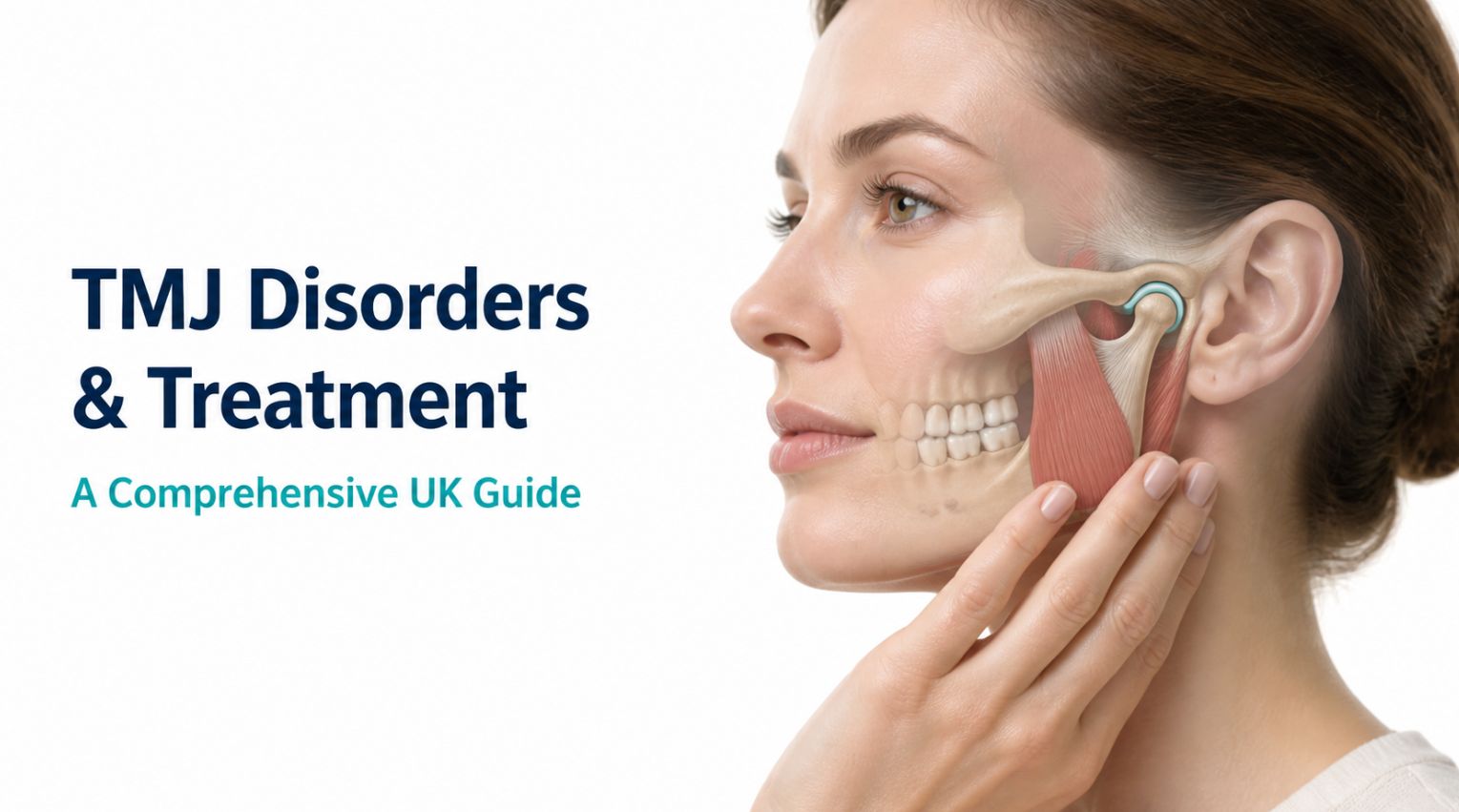
Temporomandibular joint disorders – usually shortened to TMJ disorders or TMD – are a group of conditions affecting the jaw joints, chewing muscles and nearby structures. They can cause jaw pain, clicking, headaches, ear-area discomfort and difficulty opening or using the mouth normally.
TMJ symptoms are common and often improve with conservative treatment. In the UK, current clinical guidance generally supports starting with reversible, non-invasive care such as education, self-management, physiotherapy, suitable pain relief and, in selected cases, a bite splint. Surgery is reserved for specific structural joint problems or persistent symptoms that have not responded to simpler treatment.
Medical disclaimer: This guide is for general information and does not replace an examination by a dentist, GP, oral and maxillofacial surgeon, physiotherapist or other qualified healthcare professional.
What Is the Temporomandibular Joint?
The temporomandibular joints are the two joints connecting the lower jaw, or mandible, to the skull. One joint sits just in front of each ear. They allow the jaw to open, close, slide forwards, move backwards and move from side to side when speaking, chewing, swallowing and yawning.
Each TMJ includes bone, cartilage, ligaments, muscles and a small cushioning disc. This disc normally moves smoothly with the jaw and helps distribute pressure during movement. Because the jaw joints work alongside powerful facial and neck muscles, pain can arise from the joint itself, the muscles, the disc or a combination of factors.
The term TMJ technically refers to the joint. TMD, or temporomandibular disorder, is the more accurate name for a condition affecting the joint and/or the chewing muscles. Nevertheless, many patients search for “TMJ pain”, “TMJ treatment” or “TMJ dysfunction”, so both terms are commonly used.
Types of TMJ Disorders
TMD is not one single diagnosis. It is an umbrella term for several problems that may overlap.
Muscle-Related TMD
Muscle-related TMD, also called myofascial pain, affects the muscles that move the jaw. These include the masseter muscles at the sides of the cheeks and the temporalis muscles around the temples.
Muscle tension, jaw clenching, teeth grinding and prolonged jaw activity can overload these muscles. Patients may wake with a tight jaw, experience aching in the cheeks or temples, or notice pain after chewing hard foods, talking for a long time or periods of stress.
Disc Displacement
The cushioning disc in the TMJ can move out of its ideal position. When it moves back into place as the mouth opens, this may produce a click, pop or snap.
A click alone is not always a problem. Many people have jaw noises without pain, locking or reduced movement and require no treatment. However, clicking accompanied by pain, intermittent locking or a reduced ability to open the mouth should be assessed.
In some cases, the disc remains displaced and does not reduce normally. This can cause a sudden limitation in mouth opening, sometimes described as a “closed lock”.
Joint-Related TMD
Joint conditions can include inflammation, sprain or strain, osteoarthritis, inflammatory arthritis or structural changes within the joint. Joint-related symptoms may include pain directly in front of the ear, grating or grinding noises known as crepitus, stiffness and a change in the way the teeth meet.
Age-related or wear-related joint changes are not uncommon. However, significant pain, reduced function or rapid changes in the bite should be investigated rather than assumed to be a normal part of ageing.
Hypermobility and Open Locking
Some people have unusually mobile jaw joints. The jaw may open very widely or occasionally become stuck in an open position after yawning, laughing, dental treatment or biting into large food.
This is called jaw dislocation or open locking and needs prompt professional assessment, particularly if the jaw cannot be brought back into its normal closed position.
TMJ Disorder Symptoms
TMD symptoms can vary from mild and intermittent to persistent and disruptive. They may affect one side or both sides of the face.
Common signs and symptoms include:
-
Pain in front of the ear, around the jaw, cheek or temple
-
Tender or tired chewing muscles
-
Clicking, popping, crackling or grating sounds from the jaw
-
Difficulty opening the mouth fully
-
Jaw stiffness, locking or a sensation that the jaw catches
-
Pain when chewing, biting or yawning
-
Headaches, particularly around the temples
-
Facial pain or pressure
-
Ear-area pain, fullness or ringing symptoms
-
Neck and shoulder muscle tension
-
Changes in the bite or the feeling that the teeth no longer meet normally
Pain can be felt in or around the ear, but a TMD does not automatically mean there is an ear infection. A dentist or GP may need to rule out dental infection, sinus conditions, ear disease, neuralgia, migraine, salivary-gland problems and other sources of facial pain.
The three classic features often associated with TMD are facial or jaw pain, restricted jaw function and joint noise.
What Causes TMJ Problems?
There is rarely one simple cause. TMD commonly develops through a combination of physical, behavioural and psychological factors.
Clenching and Teeth Grinding
Teeth clenching and grinding, known as bruxism, can place excessive strain on the jaw muscles and joints. Some people grind or clench during sleep, while others hold their teeth together during concentration, driving, exercise or stressful situations.
Normal resting jaw posture should usually involve the teeth being apart, with the lips lightly together and the tongue relaxed against the palate. Continuous tooth contact outside of eating can overload the muscles over time.
Stress, Anxiety and Sleep Problems
Stress does not mean jaw pain is “all in the mind”. Rather, stress can increase muscle tension, alter pain sensitivity, affect sleep and make clenching habits more likely. Chronic pain can also cause stress, creating a cycle that needs a broader treatment plan.
Good TMD care may include discussing sleep, workload, anxiety, pain coping strategies and habit awareness. Psychological support is a valid part of managing persistent pain when needed.
Overuse or Jaw Injury
Chewing gum, biting nails, chewing pens, eating hard foods, wide yawning, singing for long periods and holding a phone between the shoulder and jaw can overload the jaw system. Dental treatment requiring prolonged mouth opening may also temporarily aggravate symptoms.
A blow to the face, sports injury, whiplash-type event or fall can affect the joint or muscles. Mention any injury during your consultation, especially if symptoms began soon afterwards.
Arthritis and Joint Changes
Osteoarthritis, rheumatoid arthritis and other inflammatory joint conditions can involve the TMJ. Grinding or crunching sounds, increasing stiffness, persistent joint pain and bite changes may be more suggestive of joint involvement than muscle tension alone.
Posture and Neck Problems
The jaw does not work in isolation. Neck position, shoulder tension and head posture can influence the muscles around the jaw and face. For some patients, a physiotherapist-led programme addressing both the jaw and neck can be useful.
Dental Bite: A Common Misunderstanding
Patients often assume that TMD is caused by an “uneven bite” and needs extensive dental adjustment. In reality, TMD is complex and irreversible bite changes are not routinely recommended as first-line treatment.
Grinding down healthy teeth, replacing multiple restorations or undergoing orthodontic treatment solely to treat jaw pain is not usually appropriate without a clear, carefully diagnosed dental indication. UK guidance prioritises conservative, reversible care initially.
How Is TMD Diagnosed?
A dentist, GP or specialist will begin by taking a detailed history. They may ask when symptoms started, whether pain is constant or episodic, what makes it worse, whether the jaw clicks or locks, and whether you clench or grind your teeth.
The clinical examination may include:
-
Feeling the jaw joints and chewing muscles for tenderness
-
Measuring how far the mouth opens
-
Checking whether the jaw moves smoothly or deviates to one side
-
Listening and feeling for clicking or crepitus
-
Examining the teeth for signs of grinding or tooth wear
-
Checking the bite, gums and surrounding teeth
-
Assessing neck muscles and posture where relevant
Not every patient needs a scan. X-rays, CBCT scans or MRI may be considered if there is suspected arthritis, trauma, marked limitation of movement, persistent locking, structural joint disease or symptoms that do not improve with conservative care.
An MRI scan is particularly useful for assessing soft tissues such as the joint disc, while CT or CBCT imaging gives greater detail of the bony joint structures. Imaging should be selected because it is likely to change diagnosis or treatment—not simply because a joint clicks.
First-Line TMJ Treatment: Conservative and Reversible Care
Most TMD management begins with reassurance, education and self-management. This approach is not “doing nothing”; it is an active treatment plan aimed at reducing aggravating forces, calming muscle tension and improving normal movement.
Royal College of Surgeons guidance highlights that reversible and non-invasive therapy should be the initial management approach for TMD.
Resting the Jaw and Adjusting Diet
During a painful flare-up, choose soft foods that require less chewing. Options may include soup, yoghurt, scrambled eggs, fish, pasta, rice dishes, cooked vegetables and smoothies eaten from a cup rather than through a straw if this causes jaw discomfort.
Cut food into smaller pieces. Avoid biting into apples, crusty rolls, large burgers or hard sweets with the front teeth. Try not to open the mouth widely when yawning; supporting the chin gently can help limit an extreme opening.
Avoid chewing gum, pen tops, ice and fingernails. These habits can seem minor but may repeatedly irritate already sensitive muscles and joints.
The NHS specifically recommends soft foods, avoiding gum and nail biting, not biting food with the front teeth, avoiding very wide yawning and keeping the teeth apart when not eating.
Heat or Cold Therapy
A wrapped cold pack may help during an acute pain flare or after a period of overuse. Gentle moist heat can be helpful for persistent muscle tightness or a dull ache.
Use a barrier such as a tea towel between your skin and the pack. NHS guidance advises a wrapped cold pack for no more than five minutes at a time, or a wrapped hot-water bottle for 15 to 20 minutes twice daily. Stop if symptoms worsen or skin becomes excessively red, numb or uncomfortable.
Self-Massage and Gentle Movement
Massage can help relax tender chewing muscles. Using clean fingers, gently massage the cheek muscles and temple area in small circles. Avoid pressing hard directly over a painful joint.
Gentle jaw exercises may be beneficial, but they should not cause sharp pain or force the mouth open. A physiotherapist, dentist or oral and maxillofacial clinician can provide exercises appropriate to your TMD subtype. The goal is controlled, comfortable movement—not aggressive stretching.
Habit Reversal and Relaxation
One of the most useful habits to develop is the “lips together, teeth apart” position. Check yourself during the day: are your teeth touching while working, scrolling, driving or concentrating? If they are, allow the jaw to relax.
Breathing exercises, mindfulness, regular movement, adequate sleep and stress-management techniques may reduce muscle tension and improve pain coping. This is particularly relevant when symptoms fluctuate with stressful periods.
Medicines for TMJ Pain
Pain relief should be discussed with a dentist, GP or pharmacist, especially if you have other medical conditions or take regular medication.
Paracetamol or an anti-inflammatory medicine such as ibuprofen may be suitable for short-term pain relief for some people. Anti-inflammatory medicines are not appropriate for everyone, including people with certain stomach ulcers, kidney conditions, bleeding risks, heart conditions, asthma or medication interactions.
For more persistent symptoms, a clinician may consider a limited course of other medicines, such as muscle relaxants or medicines used for chronic pain. These should be prescribed only after individual assessment, as benefits and side effects differ between patients.
Medication should support a wider programme of self-management and rehabilitation, rather than becoming the only treatment.
Bite Splints and Night Guards
A bite splint, stabilisation splint or night guard is a removable appliance worn over the upper or lower teeth. It may be considered for some patients with clenching, grinding, muscle pain or certain joint symptoms.
Splints can protect teeth from wear and may help reduce overload in selected cases. However, they do not work identically for every form of TMD and should be properly assessed, designed and monitored. An ill-fitting appliance or one that permanently changes tooth contact can create problems.
Avoid using online boil-and-bite guards as a long-term substitute for professional assessment if you have significant pain, locking, bite changes or restricted movement. A dentist can establish whether a splint is appropriate and ensure it is reviewed.
Physiotherapy and Multidisciplinary Care
Physiotherapy can be valuable when jaw pain is linked to muscle dysfunction, limited movement, neck tension or poor movement patterns. Treatment may include guided exercises, manual therapy, posture work, education and a home programme.
For persistent TMD, care may involve more than one professional: a dentist may assess teeth and jaw joints; a physiotherapist may address movement and muscle function; a GP may support pain medication or investigate other health issues; and a psychologist or pain-management service may help where chronic pain, sleep disruption, anxiety or pain-related distress are substantial.
Recent UK guidance supports active self-management as a core element of care, including education, self-exercise, thermal therapy, self-massage, diet adjustment and management of parafunctional habits such as clenching.
Injections and Advanced Treatments
Some patients with persistent, accurately diagnosed TMD may be considered for injections. Options vary and may include local anaesthetic, corticosteroid injections in selected inflammatory conditions, or trigger-point treatments for muscular pain.
Evidence and suitability differ considerably, so injections should not be viewed as routine first-line treatment. They are normally considered only after an appropriate examination, diagnosis and trial of conservative options.
Botulinum toxin injections are sometimes marketed for jaw clenching and facial slimming. They are not a simple universal TMJ solution and should be approached cautiously. Reducing muscle activity can have side effects, and the underlying cause of jaw pain still needs proper assessment.
TMJ Surgery: When Is It Considered?
Surgery is uncommon and should not be the first response to jaw clicking or muscle pain. It may be considered where there is a significant structural disorder, severe degenerative change, recurrent dislocation, trauma, persistent closed locking or pain and dysfunction that have not improved with suitable non-surgical care.
Potential procedures include:
-
Arthrocentesis: flushing the joint with fluid using needles
-
Arthroscopy: minimally invasive keyhole surgery inside the joint
-
Open-joint surgery: used for selected structural problems
-
Total joint replacement: reserved for severe, carefully assessed joint disease
NICE lists conservative options such as rest, NSAIDs, splints and physiotherapy before surgical approaches, which may include arthroscopy, joint remodelling or, in rare advanced cases, replacement of the joint.
Surgery carries risks and requires specialist assessment. The potential benefits must clearly outweigh the risks for the individual patient.
When to Seek Urgent Help
Most jaw clicking and mild muscular pain do not require emergency treatment. However, seek urgent dental, GP or NHS 111 advice if you have:
-
Inability to open the mouth properly or a jaw that is locked
-
A jaw that is stuck open
-
Significant facial swelling, fever or signs of dental infection
-
Severe pain after a facial injury
-
A rapidly changing bite
-
Numbness, weakness or unexplained facial swelling
-
Difficulty swallowing or breathing
Call 999 or attend A&E if there is breathing difficulty, serious trauma, uncontrolled bleeding or rapidly spreading swelling affecting the face or neck.
The NHS advises urgent assessment for difficulty opening the mouth fully or jaw locking.
Frequently Asked Questions About TMJ Disorders
Is jaw clicking always a TMJ disorder?
No. Jaw noises without pain, locking or restricted movement are common and often harmless. If clicking is painful, persistent, associated with locking or affects normal eating, arrange an assessment.
Can TMD cause headaches?
Yes. Overloaded jaw and temple muscles can contribute to temple headaches and facial pain. However, recurrent or severe headaches may have other causes, so speak to a GP or dentist rather than self-diagnosing.
Will a mouth guard cure TMJ?
A professionally made splint may help some patients, especially where clenching or grinding is a contributor. It is not a guaranteed cure and should form part of a broader plan that may include habit changes, exercises and stress management.
How long do TMJ symptoms last?
Many people improve over weeks or months with conservative management. Symptoms can fluctuate, particularly during periods of stress, poor sleep or increased clenching. Persistent pain or reduced function deserves professional review.
Can orthodontics fix TMJ pain?
Orthodontic treatment should not be undertaken solely as a cure for TMJ pain without a clear orthodontic indication. TMD is multifactorial, and irreversible bite changes are not normally first-line care.
Final Thoughts
TMJ disorders can be uncomfortable and frustrating, but they are usually manageable. The most effective starting point is a calm, conservative approach: understand the problem, reduce jaw overload, improve resting posture, use suitable pain-relief strategies, address clenching and obtain professional advice where symptoms persist.
If your jaw pain is worsening, your mouth opening is limited, your jaw locks, or you are unsure whether symptoms are dental, muscular or medical, arrange an assessment. Early diagnosis helps rule out other causes and allows treatment to be tailored to the actual problem.
Sources
- NHS: Temporomandibular disorder (TMD)
- Royal College of Surgeons of England: Management of painful temporomandibular disorder in adults
- British Dental Journal: Royal College of Surgeons guidance for TMD in primary care
- NICE: Total prosthetic replacement of the temporomandibular joint
- NHS England GIRFT and Royal College of Surgeons: Painful TMD clinical summary