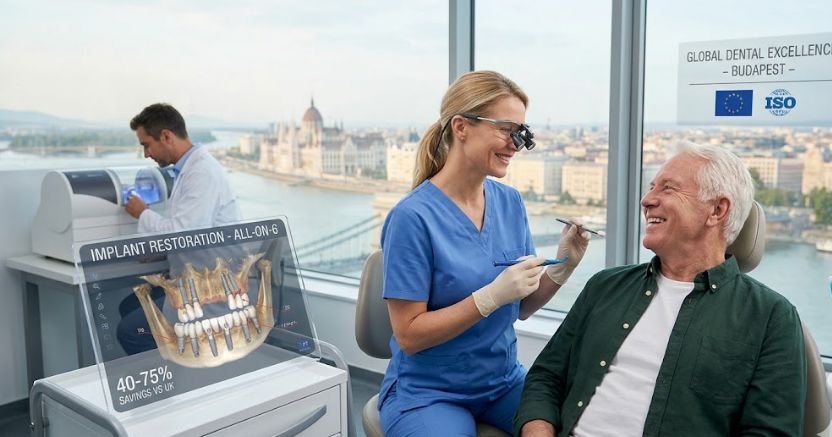
The UK healthcare landscape has shifted dramatically. With the NHS dental contract system facing unprecedented backlogs, millions of British adults find themselves unable to secure a routine appointment, let alone complex restorative care. Private fees on the high street have skyrocketed, turning standard procedures like single implants, crowns, and multi-unit bridges into major financial hurdles.
This has accelerated a global phenomenon: dental tourism. It is the practical choice of travelling across borders to receive world-class dental care at a fraction of domestic costs, frequently combined with a holiday or city break.
For a UK citizen, navigating this borderless dental market requires an objective, analytical look at how this industry evolved, where it stands today in 2026, and where it is heading.
The Origin: How Dental Tourism Became a Viable Choice
To understand the sophisticated medical networks of today, we have to look back to the late 1990s and early 2000s. Dental tourism did not start as a highly marketed, digital enterprise; it began out of pure geographic necessity.
The Rise of Cross-Border Commuting in Europe
Before the UK became a primary source market, dental tourism was a local, regional habit in Central Europe. Austrian and German patients living near the border realized they could drive an hour into Hungary—specifically to towns like Sopron, Mosonmagyaróvár, or Budapest—and receive identical dental care for less than half the price.
When the European Union expanded in 2004, it unified cross-border medical standards, qualifications, and material safety regulations. Suddenly, traveling for medical care went from an informal life hack to a legally protected consumer choice.
North America’s Border Towns
A parallel evolution occurred across the Atlantic. American and Canadian patients, facing a lack of universal dental coverage and high out-of-pocket costs, began crossing the southern border into Mexico. This grassroots migration transformed tiny border settlements like Los Algodones into “Molar City,” a dense enclave where hundreds of dentists operate within a few square blocks to serve international visitors.
The Early UK Influx
For British patients, the catalyst was budget aviation. The expansion of airlines like Ryanair and EasyJet in the mid-2000s connected regional UK airports directly to Central European hubs. A trip to Budapest or Prague was no longer an exclusive luxury; it was cheaper than a domestic train ticket. Early adopters realized that even when you added a flight and a hotel room to the bill, a full-mouth restoration abroad was thousands of pounds cheaper than a local private clinic in London or Manchester.
The Global Dental Map: Key Regions
Today’s dental tourism industry is highly segmented by geography. Patients naturally gravitate toward destinations that balance short travel times with maximum cost efficiencies.
| Region | Primary Destinations | Key UK Patient Demographics | Typical Clinical Strengths |
| Europe & Near East | Hungary (Budapest), Turkey, Poland, Czech Republic | UK, Ireland, Germany, Scandinavia | Full-mouth reconstructions, complex implantology, premium cosmetic smile makeovers. |
| North America | Mexico (Los Algodones), Costa Rica | United States, Canada | Root canals, crowns, general restorative dentistry, implant overdentures. |
| Asia-Pacific | Thailand (Bangkok, Phuket), India, Malaysia | Australia, New Zealand, Expatriates | General dentistry combined with long-haul luxury beach resort holidays. |
1. Europe and the Near East: The UK’s Primary Hubs
-
Hungary (Budapest): Long recognized as the dental capital of Europe, Hungary commands roughly 40% of the EU’s dental tourism market. It built its reputation on highly rigorous, academic dental training and a clinical focus on heavy restorative work, including complex bone grafting, sinus lifts, and full-arch dental implants.
-
Turkey (Antalya, Istanbul): Turkey has seen explosive growth over the last decade, particularly for patients seeking comprehensive cosmetic upgrades. Operating as a massive hub for “Hollywood Smiles,” Turkish clinics excel at full-coverage zirconia crowns and veneers, supported by a highly developed concierge infrastructure that packages flights, five-star hotels, and private transfers together.
-
Poland and the Czech Republic: These countries serve a steady stream of European travellers, offering excellent clinical care with a focus on standard restorative procedures and individual implant placements, particularly for patients looking for quiet, city-break destinations.
2. North America: The Dollar-Driven Corridors
-
Mexico: Positioned directly at the US border, destinations like Los Algodones welcome thousands of North American patients daily. The infrastructure is tailored for rapid turnaround times, allowing patients to drive across the border for crowns, extractions, and dentures.
-
Costa Rica: Combining medical care with eco-tourism, Costa Rica attracts patients seeking a more relaxed, tropical recovery environment for comprehensive oral rehabilitation.
3. Asia and Australia: The Long-Haul Vacation Model
-
Thailand: For Australian and New Zealand travellers facing high domestic healthcare costs, Bangkok and Phuket are the default choices. The model here leans heavily into the “tourism” element, allowing patients to combine root canals or cosmetic bonding with an extended tropical holiday.
The Economics: Why Care Costs Less Abroad
A common source of hesitation for first-time patient-travellers is the price gap. When a UK private clinic quotes £20,000 for a full-arch All-on-4 implant restoration, and an overseas clinic offers the same work for £6,500, it is natural to ask if corners are being cut.
The reality is that these savings are driven by structural economic differences between countries, not by inferior materials or substandard medical care.
1. Lower Local Cost of Living and Labor
The single largest expense for any dental practice is labor—including dental assistants, lab technicians, receptionists, and the dentists themselves. In destinations like Hungary or Turkey, the average cost of living is substantially lower than in the UK. This means fair, competitive salaries go much further, directly reducing the operational cost per hour for the clinic.
2. Commercial Real Estate and Maintenance Costs
Leasing or buying a commercial property in central London, Birmingham, or Manchester comes with a massive premium. High business rates, utility costs, and property maintenance fees force UK clinics to raise their prices just to break even. Overseas clinics operate in markets where commercial rents, construction costs, and facility maintenance are far more economical, allowing them to build spacious, state-of-the-art facilities without taking on unmanageable debt.
3. Reduced Medical Malpractice Insurance Premiums
The legal and regulatory framework in the UK creates high indemnity and malpractice insurance premiums for private dental practitioners. These recurring insurance costs are inevitably passed down to the patient. In many premier dental tourism destinations, the insurance market is structured differently, resulting in significantly lower overheads for medical professionals.
4. Minimal Student Loan Pressures
The financial burden on a newly qualified dentist changes how they price their services. A typical UK dental graduate often leaves university with significant tuition and maintenance debt, forcing them to maximize income early in their careers. In contrast, many European countries offer highly subsidized or free higher education for top-tier medical students, meaning local dentists enter the workforce without massive debt loads weighing down their business models.
5. Material Standarization and Economies of Scale
High-quality international clinics use the exact same premium materials and implant brands as UK private practices—such as Straumann, Nobel Biocare, or Ivoclar Vivadent. However, because specialized dental tourism clinics operate at a massive volume, processing hundreds of implant cases every month, they benefit from wholesale purchasing power. They can source implants, abutments, and milling blocks at bulk rates that a local high-street practice simply cannot access.
Analyzing the Risks and Structural Disadvantages
While the financial savings—typically ranging from 40% to 75% even after factoring in flights, hotels, and meals—are compelling, dental tourism requires a balanced approach. It is an elective medical journey, and like any medical procedure, it carries distinct logistical and structural risks that must be carefully managed.
1. The Logistics of Guarantees and Complications
Every surgical and restorative procedure carries a small baseline risk of failure. An implant may fail to integrate with the bone, or a crown may require an absolute bite adjustment. If a complication arises after returning to the UK, resolving it under the clinic’s warranty requires a return flight and accommodation. While reputable clinics cover the cost of the corrective treatment itself, the patient must still commit the extra travel time and immediate travel expenses to return to the destination.
2. Implant System Compatibility Failures
There are hundreds of dental implant brands globally, each requiring specific proprietary tools, drivers, and prosthetic components to adjust or repair. If an international clinic uses a regional or niche implant brand that is not widely distributed in the UK, local high street dentists may lack the specific tools required to tighten a loose abutment screw or replace a crown years down the line.
Expert Recommendation: Always request a formal implant passport detailing the exact brand, model, and lot number of your implants. Ensure the clinic uses globally recognized brands (such as Straumann, Nobel Biocare, ZimVie, or BioHorizons) that any implantologist worldwide can service.
3. The Compressed Treatment Timeline
In a standard domestic setting, an implant treatment plan might span six to nine months, allowing for long healing periods between extractions, bone grafting, and final prosthetic placement. In a dental tourism framework, these steps are often condensed into one- or two-week trips.
Squeezing complex procedures into a fixed holiday itinerary can create pressure to accelerate recovery phases, such as osseointegration (the biological process where bone fuses to the implant). If a patient’s bone density is lower than expected upon arrival, rushing the schedule rather than extending the stay increases the overall risk of long-term mechanical or biological failure.
Blueprint for Success: How to Plan Safe Treatment
Maximizing the benefits of traveling abroad for dental care requires moving past superficial marketing and conducting thorough, independent research.
Step 1: Secure a Local Diagnostic Baseline
Before reaching out to international clinics, obtain a recent panoramic digital X-ray or a CBCT (Cone Beam Computed Tomography) scan from a local imaging center. Sending high-resolution, objective diagnostic data allows overseas clinicians to provide an accurate, realistic preliminary treatment plan and cost estimate, reducing the likelihood of unexpected surprises during the initial face-to-face consultation.
Step 2: Verify International Accreditations and Registrations
Do not rely solely on the testimonials listed on a clinic’s homepage. Cross-verify that the clinical directors and treating specialists hold active registrations with their respective national regulatory bodies.
-
For Hungary, check the Hungarian Medical Chamber (Magyar Orvosi Kamara – MOK).
-
For Turkey, verify registration with the Turkish Dental Association (Türk Dişhekimleri Birliği – TDB) and check for a formal medical tourism certificate issued by the Ministry of Health.
-
Look for international affiliations, such as memberships in the International Team for Implantology (ITI) or the European Association for Osseointegration (EAO).
Step 3: Seek Independent Patient Critiques
Evaluate patient feedback across independent third-party platforms, specialized dental forums, and verified review ecosystems where entries cannot be easily altered or deleted by the clinic’s marketing team. Look for detailed, multi-year accounts that outline not just the immediate transformation, but how the restorations feel and function two, three, or five years post-treatment.
Step 4: Demand Explicit, Written Warranty Frameworks
Before paying a deposit or booking flights, obtain a copy of the clinic’s official terms and conditions. A transparent warranty should explicitly state:
-
The exact duration of coverage for different components (e.g., lifetime for implant fixtures, 5–10 years for crowns and bridges).
-
The precise protocol if corrective work is required.
-
Who covers the costs of local emergency stabilizing care if an immediate return journey is impossible.
The Present: The Modern Patient Journey
The modern patient experience bears little resemblance to the uncoordinated medical travel of the past. Today, top-tier international clinics operate as end-to-end hospitality and medical ecosystems designed to eliminate the friction of traveling for healthcare.
Digital Consultations and Telehealth Prep
The journey now begins long before packing a suitcase. Through secure digital portals, patients upload their scans and participate in live video consultations with senior implantologists or cosmetic specialists. This step clarifies expectations, establishes a transparent cost structure, and outlines the exact number of visits required before any travel arrangements are finalized.
End-to-End Concierge Logistics
The moment a patient lands at their destination, they enter a coordinated care network. Premium clinics provide private airport transfers, assign a dedicated native English-speaking patient coordinator, and maintain partnerships with local hotels situated near the clinical facility. This level of support minimizes stress, allowing the patient to focus entirely on their clinical care and recovery.
In-House Digital Production Laboratories
The integration of full-scale digital workflows has significantly reduced treatment times while increasing accuracy. Leading international clinics feature in-house dental laboratories equipped with advanced CAD/CAM (Computer-Aided Design and Computer-Aided Manufacturing) milling machines and 3D printers.
Instead of waiting a week for an external lab to manufacture a bridge or crown, digital impressions are transmitted instantly to on-site technicians. Adjustments, shading variations, and structural refinements are completed in hours rather than days, ensuring a precise, comfortable fit within the limits of a travel itinerary.
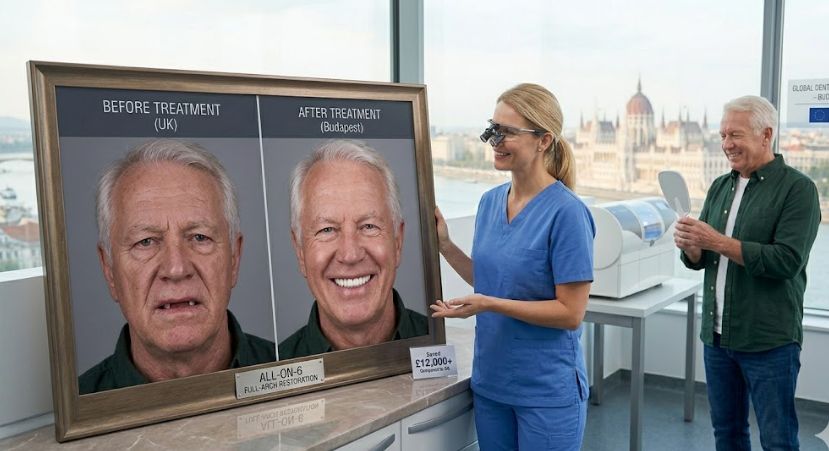
The Future: Trends Reshaping the Industry
As we look toward the horizon, dental tourism is evolving from a straightforward cost-saving alternative into a highly technologically advanced sector that often outpaces standard high-street clinics in innovation.
1. Guided Robotic Surgery and AI-Driven Diagnostics
Artificial intelligence is changing the way treatment plans are generated. AI diagnostics can analyze structural scans with extreme precision, highlighting subtle variations in bone density and identifying the ideal positions for implant placement before the doctor ever picks up a instrument.
Furthermore, guided surgical templates—and increasingly, robotic-assisted navigation systems—allow international specialists to place implants with micron-level accuracy. This level of precision minimizes surgical trauma, reduces chair time, and shortens the post-operative recovery phase for traveling patients.
2. Next-Generation Biomaterials
The materials used in full-mouth restorations are becoming more durable and biocompatible. While monolithic zirconia remains a reliable choice for strength, the industry is transitioning toward advanced composite polymer frameworks and translucent, multi-layered porcelains that perfectly mimic the light-reflecting properties of natural enamel. These materials are highly resistant to chipping and wear, ensuring that a smile transformation remains functional for decades.
3. The Rise of Hybrid Local-International Networks
One of the most valuable structural shifts on the horizon is the development of formal cross-border clinical alliances. Recognizing that post-operative care and long-term maintenance are common concerns for patients, premier overseas clinics are building networks with designated dental practices within the UK.
Under this hybrid model, a patient can undergo their primary complex surgery or cosmetic restoration abroad, but return home knowing there is a partner clinic in London, Manchester, or Edinburgh ready to handle routine annual check-ups, cleanings, and any minor adjustments. This approach bridges the gap between international value and local peace of mind.
4. Hyper-Personalized Extended Medical Tourism
As global populations prioritize wellness and longevity, dental tourism is increasingly integrating with broader health and recovery experiences. Future trends point toward comprehensive packages where dental rehabilitation is paired with advanced diagnostic health screenings, spa-based recovery therapies, and targeted nutritional guidance. This approach reframes dental travel from a stressful medical necessity into a proactive investment in long-term health and vitality.
Navigating Your Options Safely
For UK and US patients left behind by an underfunded public system or priced out of private local alternatives, dental tourism presents a reliable, sophisticated solution. By understanding the structural reasons behind the cost differences, choosing established destinations like Hungary or Turkey, and insisting on global material standards and transparent warranties, you can secure world-class restorative care that fits your budget.
The market has evolved from an experimental option into a highly regulated, technologically advanced global industry. With a methodical approach to planning and a clear understanding of the logistics, your path to a healthier, more confident smile can be a safe, smooth, and genuinely rewarding journey.