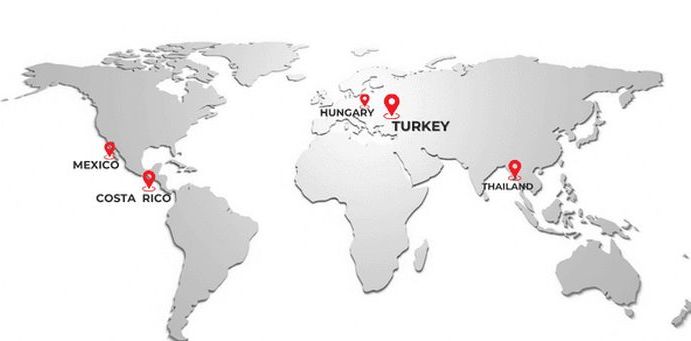
Dental implant tourism has become mainstream for many U.S. patients seeking high‑quality care at a fraction of domestic costs, especially for full arch rehabilitation — one of the most transformative yet expensive dental procedures. Historically, Mexico has been one of the most popular destinations for Americans due to proximity and cost savings. Yet, today there are strong global alternatives worth considering: Turkey, Hungary, and Poland. For patients around Philadelphia and the U.S. East Coast, a major development in 2026 — the launch of direct flights from Philadelphia to Budapest — reshapes the calculus in favor of Central Europe, making Budapest an especially compelling destination for comprehensive dental care.
This review explores the clinical quality, costs, travel considerations, logistics of multiple trips, aftercare practicality, and overall patient experience of each destination — with a bias toward Budapest, Hungary, given its growing dental tourism ecosystem and new U.S.–Budapest air connection.
Why Full Arch Rehabilitation Requires Special Travel Planning
Full arch rehabilitation — often accomplished through procedures like All‑on‑4, All‑on‑6, or full mouth implant‑supported restorations — is not a simple “one‑visit” dental treatment. It usually involves multiple phases:
-
Initial consultation and diagnostics
-
Surgical implant placement
-
Healing and osseointegration period
-
Final prosthetic placement
For patients traveling abroad, this means coordinating travel logistics across multiple visits, ensuring continuity of care, and planning for appropriate aftercare. Travel ease, direct flights, and local support networks are therefore more than conveniences — they can be deciding factors in overall treatment success and patient peace of mind.
Why Many U.S. Patients Consider Dental Tourism
The primary motivations for Americans to explore care abroad are persistent and practical:
-
Cost savings: Full arch treatments in the U.S. often range well above $25,000–$45,000, and even higher in some markets. Dental tourism can reduce total investment significantly even after flights and accommodation.
-
Access to reputable clinics: Many overseas clinics employ internationally trained dentists and use the same implant systems found in U.S. practices.
-
Shorter wait times: Non‑emergent but complex procedures sometimes have long wait times domestically, motivating patients to seek quicker scheduling abroad.
-
Comprehensive care in destination packages: Some destinations bundle diagnostics, surgery, prosthetics, transfers, and accommodation, simplifying logistics for patients.
While Mexico remains popular, it’s worth evaluating other strong contenders — particularly for patients seeking best‑value care with high clinical standards and manageable travel realities.
Destination Comparison: Turkey, Hungary, and Poland
Let’s look at how each destination stacks up for full arch rehabilitation from both clinical and travel perspectives.
Turkey — Affordable and Established Dental Tourism Hub
Clinical Quality and Procedures
Turkey, with cities like Istanbul and Antalya, is one of the most recognizable dental tourism regions globally. Clinics here offer:
-
Full arch implants using modern protocols such as All‑on‑4, All‑on‑6, and hybrid prosthetics.
-
Digital diagnostics and planning with 3D imaging.
-
Skilled surgeons with international patient experience.
Turkish clinics often use high‑quality implant brands and integrate cosmetic dentistry with restorative procedures, making it a popular choice for patients wanting both function and esthetics.
Cost Considerations
Turkey typically offers very competitive pricing, often lower than Mexico on a per‑implant and full arch basis. Many packages include:
-
Pre‑travel consultations
-
Airport transfers
-
Hotel stays
-
Treatment and prosthetics
These comprehensive packages can make budgeting clearer and more predictable — especially for patients comparing out‑of‑pocket cost totals.
Travel Logistics
For U.S. patients, travel to Turkey usually involves at least one layover through major European or Middle Eastern hubs. There are no direct flights from Philadelphia or most U.S. cities to Turkish destinations. Especially for full arch rehabilitation requiring multiple visits, this means:
-
Longer total travel time
-
Potential for connection delays or lost luggage
-
Slightly more travel fatigue
These factors don’t outweigh the clinical value for many patients, but they do mean that Turkey remains a longer and less seamless trip than a direct flight destination.
Poland — Rising Quality with Central European Accessibility
Clinical Strengths
Poland has rapidly emerged as a strong European destination for dental care, particularly in cities like Warsaw, Krakow, and Gdansk. Clinics here are known for:
-
Implantology with full arch solutions
-
Rigorous dental training aligned with EU standards
-
Multilingual support and structured care pathways for international patients
Polish dental professionals often train or collaborate with Western European institutions, which translates into high confidence in both surgical and restorative stages.
Costs and Value
Costs in Poland for full arch rehabilitation are competitive with Hungary and generally lower than typical U.S. costs. While slightly higher than some Turkish offerings, many patients find the balance of quality, regulation, and proximity to Western Europe attractive.
Travel Considerations
Travel from the U.S. to Poland often includes at least one connection, typically via major European hubs (Frankfurt, Amsterdam, London, Warsaw, etc.). While travel time can be similar to Turkey, Poland’s central European location means shorter intra‑European drives or connections if patients combine visits with other European travel.
Poland also benefits from EU healthcare alignment with common standards across diagnostics, materials, and patient safety protocols.
Hungary (Especially Budapest) — Best Balance for U.S. Patients
Why Budapest Stands Out
Among European dental tourism hubs, Budapest, Hungary, consistently ranks high for dental implant quality, full arch rehabilitation expertise, and structured care packages, and now it has a significant travel advantage for Americans.
A major factor for 2026: Starting May 21, 2026, American Airlines will operate daily nonstop flights between Philadelphia (PHL) and Budapest (BUD). This route restores direct U.S.–Budapest connectivity after years without it and offers a travel time of roughly 8 hours and 35 minutes — with no layovers, simplifying travel planning for dental tourists.
This direct connection is a game‑changer for East Coast patients. It means:
-
One less leg and reduced travel fatigue
-
Easier coordination of multiple visits
-
Better access for follow‑up care and aftercare planning
-
Less time lost in transit — especially valuable for patients during healing periods
Budapest thus becomes not just a clinical destination but a logistically practical choice for Americans considering multi‑stage treatments like full arch rehabilitation.
Clinical Quality and Full Arch Expertise
Budapest is at the heart of Hungary’s dental tourism network, known for:
-
High volumes of full arch and implant procedures
-
Use of advanced digital planning tools
-
Treatments performed by dentists trained in European standards
-
English‑friendly clinics accustomed to U.S. patients
Hungarian clinics often use the same implant systems and surgical protocols found in reputable U.S. practices. Combined with lower treatment costs, this makes full arch rehabilitation here cost‑effective without a significant sacrifice in quality.
Cost and Value Proposition
Pricing in Budapest for complex implant treatments like All‑on‑4 or full arch prosthetics is typically well below U.S. pricing and within the competitive range of Turkey and Poland. When adding flight costs, lodging, and meals, Budapest often delivers excellent total value due to direct flights reducing travel expense and time.
Many Hungarian clinics also provide comprehensive packages — including:
-
Airport transfers
-
Treatment scheduling with clear timelines
-
Communication support for U.S. patients
This level of organization supports smoother care coordination — especially important for multi‑visit treatments.
Aftercare and Continuity of Care
One of the biggest concerns for dental tourists is aftercare once you return home. For full arch rehabilitation, monitoring healing progress, soft tissue health, and prosthetic fit is critical.
All three destinations offer high‑quality clinical aftercare instructions, but Budapest’s direct flight link makes periodic returns for follow‑up appointments significantly more feasible than it would be from the U.S. to Turkey or Poland. For example, a patient who needs minor adjustments or checks during the healing phase can more comfortably plan a repeat trip to Budapest without the burden of multi‑stop routing — a unique advantage granted by the new nonstop service.
Travel Ease and Patient Experience
When considering a dental tourism destination for complex treatments, the patient experience goes beyond the dental chair. Travel logistics, local infrastructure, and ease of communication all matter.
Budapest
-
Nonstop flights from Philadelphia starting May 2026 make it extremely convenient.
-
Hungary is centrally located in Europe, facilitating connection flights if patients wish to combine care with travel.
-
Many clinics in Budapest offer English‑speaking staff and structured dental tourism services.
Poland
-
Requires at least one connection from most U.S. cities.
-
Excellent clinics in Warsaw, Krakow, and other cities with strong multilingual support.
Turkey
-
Often requires one or more layovers.
-
Istanbul and Antalya are popular, modern destinations with robust dental tourism infrastructure.
Even with strong clinical care, travel fatigue, potential for delayed flights, and longer overall journey time can influence a patient’s overall experience — especially when multiple trips are needed.
Final Thoughts: Why Budapest Is Particularly Compelling
For U.S. patients — particularly those on the East Coast — the launch of direct flights between Philadelphia and Budapest in May 2026 marks a significant shift. This connection removes one of the biggest logistical barriers to European dental care and elevates Budapest as a seriously competitive alternative to Mexico, Turkey, and Poland for full arch rehabilitation.
Clinically, all three destinations discussed — Turkey, Poland, and Hungary — offer excellent options depending on individual priorities. Turkey remains a powerful choice for comprehensive care at competitive prices, and Poland combines EU standards with central European accessibility. However, the combination of quality care, EU regulatory alignment, structured dental tourism programs, and improved travel logistics makes Budapest stand out, especially for Americans who might otherwise be deterred by multi‑leg journeys.
If your treatment plan involves more than one visit and careful aftercare coordination — as full arch rehabilitation almost always does — choosing a destination that’s easy to reach, familiar with U.S. patient needs, and offers a supportive clinical environment can significantly improve both your experience and your outcome.
Budapest’s growing reputation and new direct connection to Philadelphia suggest it’s a destination worth serious consideration for Americans pursuing comprehensive dental implant treatment in 2026 and beyond.